In a report entitled ‘The Legal Framework for Enhanced Rock Weathering in Minnesota’, a group of authors led by Ashwin Murthy have contributed to the existing literature regarding the regulations that may apply to enhanced rock weathering (‘ERW’) by studying the relevant US federal and state laws relevant for ERW projects carried out in Minnesota. In doing so, they have examined land laws, air pollution laws, water pollution laws, waste management laws and environmental review laws. Lastly, they have set out the areas where the relevant regulations can benefit from amendments.
Key takeaways:
-
ERW is a durable CDR method that seeks to accelerate rock weathering by spreading small pieces of alkaline rocks or other components with similar features over land or water. Its application is usually envisaged in agricultural areas leveraging the activities that have been implemented for a long time and involve the addition of rock materials to soil in order to change its pH. Due to this reason, the realization of ERW activities does not entail a long and costly process, a situation that has led ERW to attract more attention compared to other CDR methods.
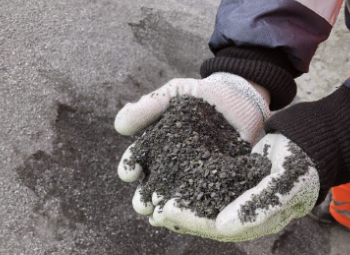
- ERW has co-benefits in that it tackles the adverse effects of ocean acidification and enhances soil health. The US holds a significant potential for ERW as it has considerable stocks of basalt and other adequate materials and possesses big agricultural land where ERW activities can take place. In the US, Minnesota is considered to be among the most suitable locations for ERW. Therefore, field experiments have already been carried out in Minnesota.
- Prior to the uptake of ERW in Minnesota, however, more research needs to be made to address the issues regarding ambiguities and risks. In this regard, ERW can inflict harm to the environment and human health and certain agricultural yields. In addition, the lack of large scale tests has made it challenging to resolve the uncertainties regarding the potential of ERW. Moreover, there are no state or federal laws in the US explicitly designed to tackle ERW, posing an additional barrier against the scaling of ERW. That said, there are a number of general laws regulating air, water quality, waste management, land management and agricultural activities that may apply to ERW. These laws’ scope and manner of application will be shaped by various factors like the venue of the project as well as its environmental and health effects.
- The existing, general laws that are applicable to ERW are not sufficiently comprehensive. As a result, they have considerable gaps in terms of soil observation prerequisites, labor regulations, research incentives and liability.
- ERW’s ability to durably remove carbon from the atmosphere is contingent upon the chemical features of the soil on which it is carried out. Therefore, rendering a decision on the venue of application of ERW necessitates the completion of observational studies, which is also essential for enabling project owners, governmental institutions and third parties to evaluate the efficiency and effects of ERW.
- The federal and Minnesota state laws do not foresee any rules regarding soil observation, nor the chemical conditions the soil must have to be considered suitable for ERW purposes. To address this gap, the Minnesota Department of Agriculture can add provisions on soil observation prerequisites to the Minnesota Rules.
- ERW can have detrimental health effects, especially in cases where it is carried out manually. Inhalation of the relevant chemicals can lead to the emergence of respiratory conditions. That said, the risks can be considerably mitigated if employees carrying out ERW wear suitable equipment. Even though the Occupational Safety and Health Act imposes the obligation to ensure that the physical conditions of the workplace are not health or life threatening, it is not applicable to agricultural activities that are governed under a different group of regulations that do not require the use of equipment designed for tackling respiratory risks. It is not clear whether ERW falls within the scope of the latter rules that do not define agricultural activities. However, if the rules are interpreted to cover ERW, employees engaging with ERW would not be required to use equipment. Under the Minnesota Occupational Safety and Health Act, there are no rules explicitly addressing the impacts of dust for those engaging in agricultural activities. Therefore, the Minnesota Department of Labor and Industry should put in place new standards for the use of equipment to mitigate the respiratory risks stemming from agricultural activities.
- Minnesota incentivizes research activities and investments geared towards enhancing soil health. However, currently, it prioritizes activities regarding nitrogen/nitrate management to the exclusion of ERW. Minnesota should explicitly include ERW within the scope of the activities it incentivizes.
- There are ambiguities surrounding liability arising from the harm inflicted upon the environment, humans or property as a result of ERW. Even though some provisions of tort law may be applicable, so far they have never been invoked in relation to ERW. State courts have not issued uniform decisions regarding liability arising from harm imposed upon adjacent areas, a situation that is observed in cases where ERW material used in one place transfers to neighboring land. Nuisance claims involving the hindrance of full enjoyment of one’s property can also be applicable in case of ERW, but they are only accepted in cases where such nuisance is deliberate, unreasonable, faulty or excessively dangerous. In Minnesota, when a period of two years elapses following the setting up of the farm, no nuisance claim can be made against agricultural activities on condition that the farm follows all applicable rules and operates pursuant to agricultural practices enjoying general acceptance. This exemption may be applicable to ERW if it can be demonstrated that ERW is an agricultural practice enjoying general acceptance. To address these shortcomings and uncertainties, Minnesota may impose liability to the operator of ERW rather than property owner, incentivizing land leasing for research purposes. That said, there are ambiguities requiring further research in relation to liability for soil poisoning due to long-term activities and unanticipated impacts of ERW.
Read the full paper here: https://scholarship.law.columbia.edu/sabin_clim