In a recently published chapter, ‘Policy Frameworks and Global Initiatives for Carbon Neutrality’, a group of authors led by Manish Singh have studied various factors impacting the adequacy of forestry practices such as management, data generation, just governance and the functioning of carbon markets.
Key takeaways:
- The increased importance of carbon neutrality has accelerated the development of nature-based solutions. In addition, it has triggered the emergence of voluntary carbon markets and strengthened international cooperation.
- Lands can operate as both carbon sinks and emitters. Strategies such as enhanced land management can expand carbon sinks while deforestation and land-use change can result in considerable carbon emissions. Therefore, careful land governance is significant for realizing global environmental goals. Agroforestry and sustainable forestry practices also play an important role in the achievement of the latter goals.
- Unlike what has been concluded by the IPCC, forest carbon sequestration does not occur following a single pattern but can go through transformations depending on local conditions. In addition, the IPCC’s reliance upon data with inadequate resolution and constrained physical coverage has been criticized in that it limits the use of data for local and regional planning. On the contrary, recent remote sensing and modelling developments have paved the way for the adoption of forest carbon mapping using high-resolution data that can calculate the quantity of current stocks and future sink potential more realistically and taking into account the features of various locations.
- As the use of forests for climate mitigation purposes increases, ensuring that forest carbon accounting systems are adequate and up-to.date is of significance.
- The EU’s Forest Strategy for 2030 seeks to increase the EU’s carbon sink capacity through practices such as afforestation, reforestation and enhanced soil management. To achieve this goal, the EU carefully examines and evaluates the conditions of its forests. Implementing initiatives in South East Asia, the ASEAN Social Forestry Network is a regional platform that facilitates collaboration and knowledge exchange among ASEAN member states regarding sustainable forestry and fair allocation of forestry benefits among local groups and indigenous groups.
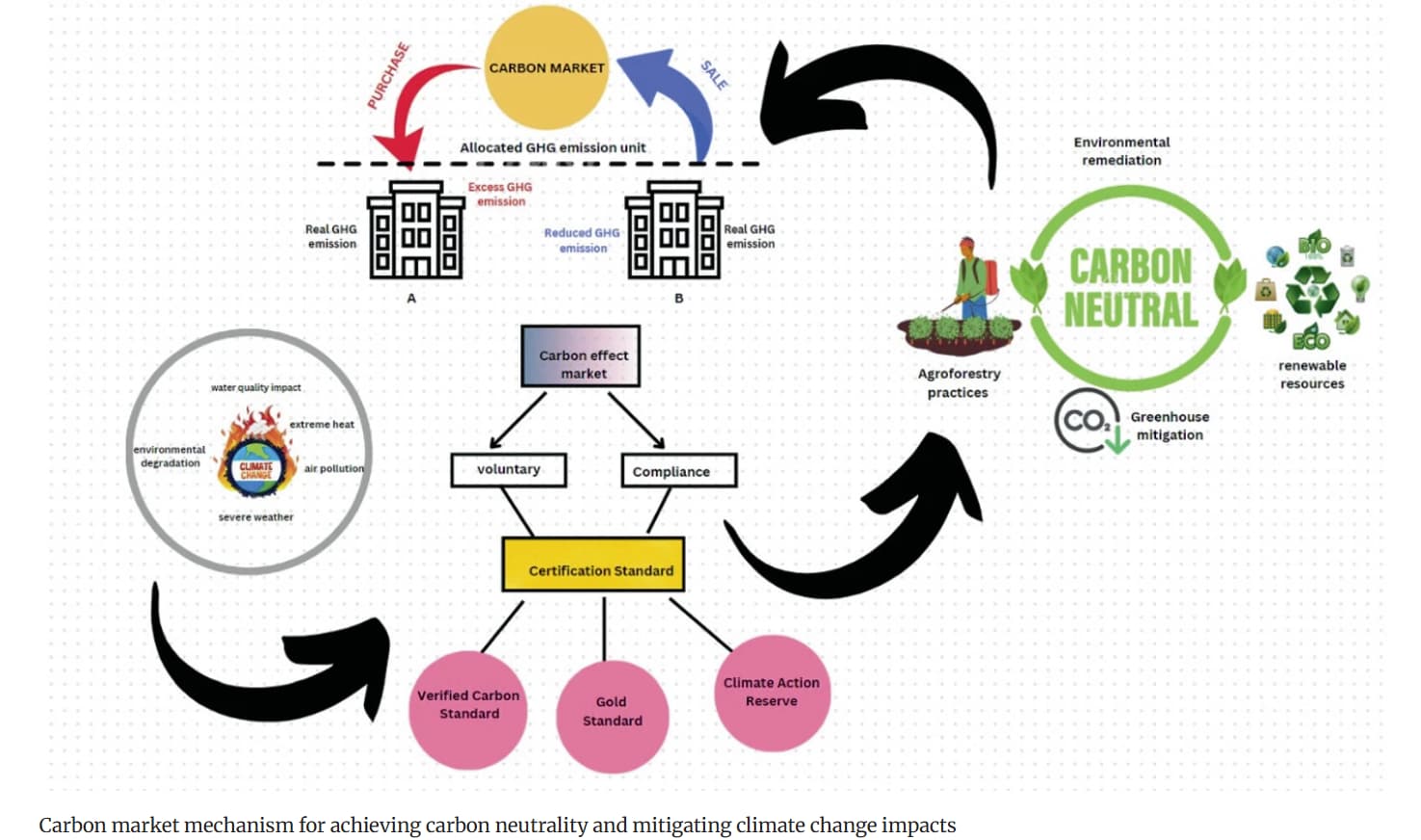
- In voluntary carbon markets, forest owners can build a reputation and be financially rewarded for their actions contributing to sustainable forest management and carbon sequestration. That said, the complex nature of these markets poses difficulties for forest owners that may risk losing the benefits to actors possessing technical knowledge. In addition, the costly nature of early project creation as well as regulatory ambiguities can disincentivize families that own forests from taking part in carbon offset activities. Similarly, such activities may fail to achieve their goals in locations where land tenure is not well-defined.
- Community based forestry management offers an alternative to centralized models that fail to take into account the concerns of local communities. That said, this approach has had a mixed success, with positive outcomes depending on the degree of community involvement, the degree of transparency and accountability of decision-making processes, the feasibility of conflict resolution and management of resource utilization and alignment between environmental sustainability and local subsistence needs. These challenges can be overcome by intensifying the efforts geared towards community capacity building and adequate policy implementation.
Read the full chapter here: Policy Frameworks and Global Initiatives for Carbon Neutrality | Springer Nature Link