In a working paper recently published by the University of Oxford’s TIDE Centre, ‘Overlooked Industrialisation Opportunity? How the Global South can Leverage Carbon Dioxide Removal (CDR)?’, Sebastian Manhart and Raphaël Cario have studied the extent to which the Global South countries can host CDR activities and benefit from them. In doing so, they have demonstrated the physical potential of the Global South countries that can facilitate the uptake of durable CDR methods. In addition, they have stressed that by 2050 employment and earnings generated by CDR in such countries would not be significantly lower than that created by the leading industrial activities in the Global North. Within this context, they have used case studies focused in Bolivia, Brazil and Kenya to illustrate that co-benefits of CDR in such contexts include rural employment, increased technological know-how and enhanced soil and air quality. The Global South countries can reap such impacts by making use of their domestic CDR frameworks while practice in relation to the EU Carbon Removal Certification Frameworks and the Paris Agreement’s Article 6 emerges.
Key takeaways:
- In the Global North, the establishment of governance frameworks as well as provision of funding in relation to CDR activities are underway. In this respect, creating the first EU certification for durable removal activities, the Carbon Removal Certification framework is anticipated to become the leading regulation in this realm at the global level. In addition, the EU has been increasing the funds it has allocated for CDR research and development activities as well as pilot projects and considering the possibility of procuring CDR credits. These actions boost CDR demand and can pave the way for the incorporation of CDR into compliance markets such as the EU Emission Trading Scheme (‘ETS’). Similarly, a number of states in the Global North have invested in or provided financial incentives for CDR activities. Within this context, the scaling of CDR activities in the Global North is expected to generate considerable economic benefits in terms of job creation and turnover.
- In the Global South, however, the CDR-related actions of governments have been limited. That said, the Global South countries are in a more advantageous position compared to the Global North countries in terms of physical potential and job creation for CDR.
- In this regard, the majority of the global agricultural biomass waste, an essential resource for CDR methods such as biochar carbon removal and bioenergy with carbon capture and storage (‘BECCS’), is located in the Global South. Similarly, the latter region hosts more than 55 % of global forest bioresources. In addition, the Global South holds considerable potential for upscaling CDR activities that consume a high degree of energy such as direct air capture and storage (‘DACCS’) owing to its significant geological storage capacity and renewable energy potential that has not been used sufficiently up until now. Lastly, the tropical regions of the Global South have massive silicate formations and adequate soil features for the scaling of enhanced rock weathering.
- In addition, CDR can considerably change the main characteristics of the workforce in the Global South by creating millions of highly paid jobs for trained workers that are significantly productive. Likewise, CDR can attract foreign investment in the Global South and play a role in changing the revenue streams of economies that currently rely on the export of commodities.
- Importantly, CDR is expected to be an important source of employment in the rural areas of the Global South facing the worst consequences of poverty. Within this context, given that CDR activities would be diffused across the Global South due to the scattered nature of raw materials and suitable physical landscape, they would not be concentrated in a limited number of locations. This situation can enable the benefits of CDR to be distributed evenly in rural areas.
- CDR can also generate significant environmental benefits in the Global South by turning agricultural wastes and sewage sediments into resources, improving the conditions of soils and contributing to renewable energy generation.
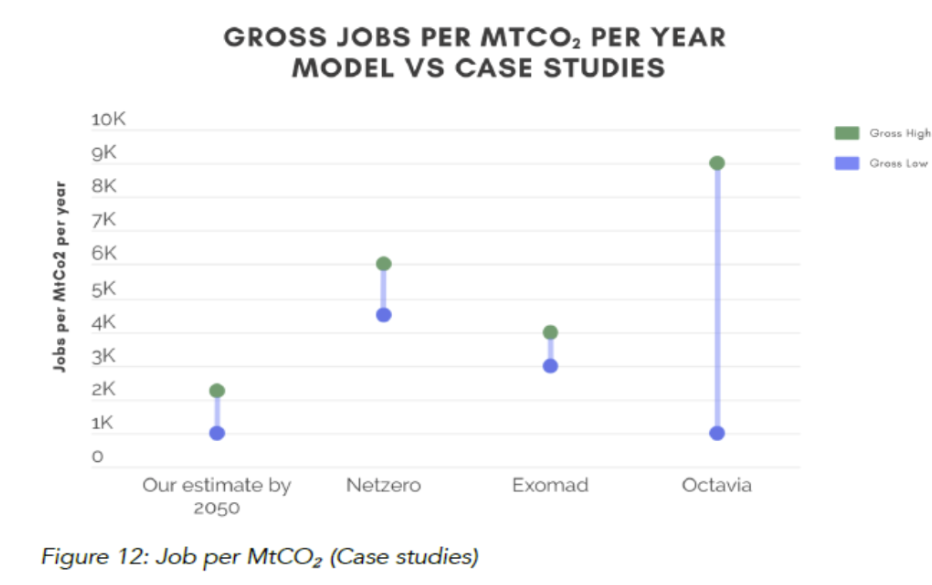
- The case studies carried out regarding three CDR companies in Bolivia, Brazil and Kenya validate the expectations of authors regarding the benefits of CDR in the Global South in terms of job creation, poverty alleviation and improved environmental conditions.
-
Notwithstanding its benefits, poorly governed CDR can jeopardize access to food and water resources, an obstacle that is exacerbated by land tenure problems, and lead to the concentration of intellectual property rights in a few entities located in the Global North.
-
To scale CDR in their territories, the Global South countries should:
i) assess their physical CDR potential,
ii) avoid regulatory ambiguity and establish certification standards aligned with the EU’s Carbon Removal and Carbon Farming Regulation
iii) establish an adequate framework for ensuring the flow of investments
iv) make use of the international carbon market foreseen in Article 6 of the Paris Agreement
v) transform their governance and permitting mechanisms to create efficient administrative procedures
vi) establish a skilled workforce and support research activities.
Read the full paper here: WORKING PAPER 94 | Overlooked Industrialisation Opportunity? How Global South can Leverage Carbon Dioxide Removal (CDR) – TIDE Centre