In a recently published post, ‘Carbon Removal Can’t Wait: Here’s How Governments Lead the Way’, Attila Yucel and Lambrini Margariti from Negative Emissions Platform have set out the lessons learned from the actions of governments that have played a pioneering role in CDR policy-making.
Key takeaways:
- Germany is investing in CDR research programs with a focus on terrestrial and ocean-based methods. Besides engaging in laboratory experiments, those carrying out research also investigate societal stances, governance and environmental effects.
- Japan is incorporating CDR into its emissions trading system. Accordingly, companies can use credits from durable CDR methods for as much as 5% of their emissions obligations and trade in credits. This initiative signalled demand and incentivized companies to invest in CDR both in Japan and abroad.
- In India, certain business undertakings that meet and exceed their ‘emissions intensity targets’ can obtain ‘carbon credit certificates’ for every tonne of CO2 they reduce or remove. Moreover, companies not belonging to the former group can voluntarily register emission reduction or removal activities to obtain credits.
- Kenya started taking steps to establish a national carbon registry to monitor emissions reductions and removals and oversee trade in credits, which can lead it to take part in the global carbon market. In addition, it provides monetary incentives to those that engage in mitigation activities by ensuring that they can benefit from a low tax rate.
- Sweden engages in reverse auctions by ensuring that the companies requesting the lowest amount of financial support are contracted for BECCS projects in order to incentivize the realization of cost-efficient CDR projects.
- Switzerland finances as much as 50 % of the costs incurred by companies engaging in CDR that win the relevant tenders.
- The UK relies on contracts for differences that guarantee undertakings the obtainment of a certain amount of financing for every tonne of carbon they remove. This means that if the market can not provide this financing the government pays the difference while the undertaking pays the difference to the government if it earns more than the required amount.
- These practices demonstrate that:
- A wide range of CDR methods should be supported to weaken risks and trigger the generation of co-benefits.
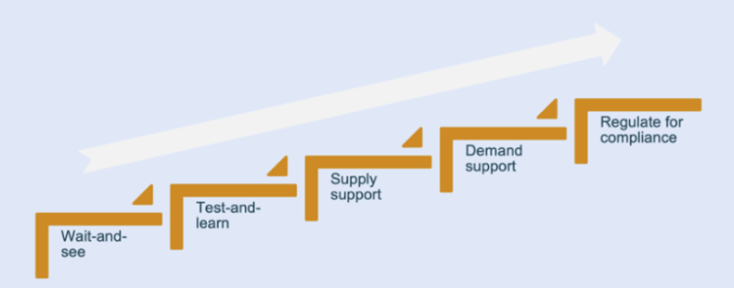
- Pilot projects regarding various policy measures should be put in place prior to their full-scale implementation, minimizing risks while providing a significant training occasion for governments.
- Funding and policy decisions should be geared towards ensuring long-term CDR deployment.
- Drawing insights from the experiences of various countries and engaging in international cooperation is of vital importance for ensuring the growth of CDR while decreasing costs.
- CDR-related developments should be examined, observations regarding them should be compiled and policy tools should be altered in line with the dynamic nature of technologies and market.
Read the full post here: Carbon Removal Can’t Wait: Here’s How Governments Lead the Way — Negative Emissions Platform